By David Lapham · Published
At a glance
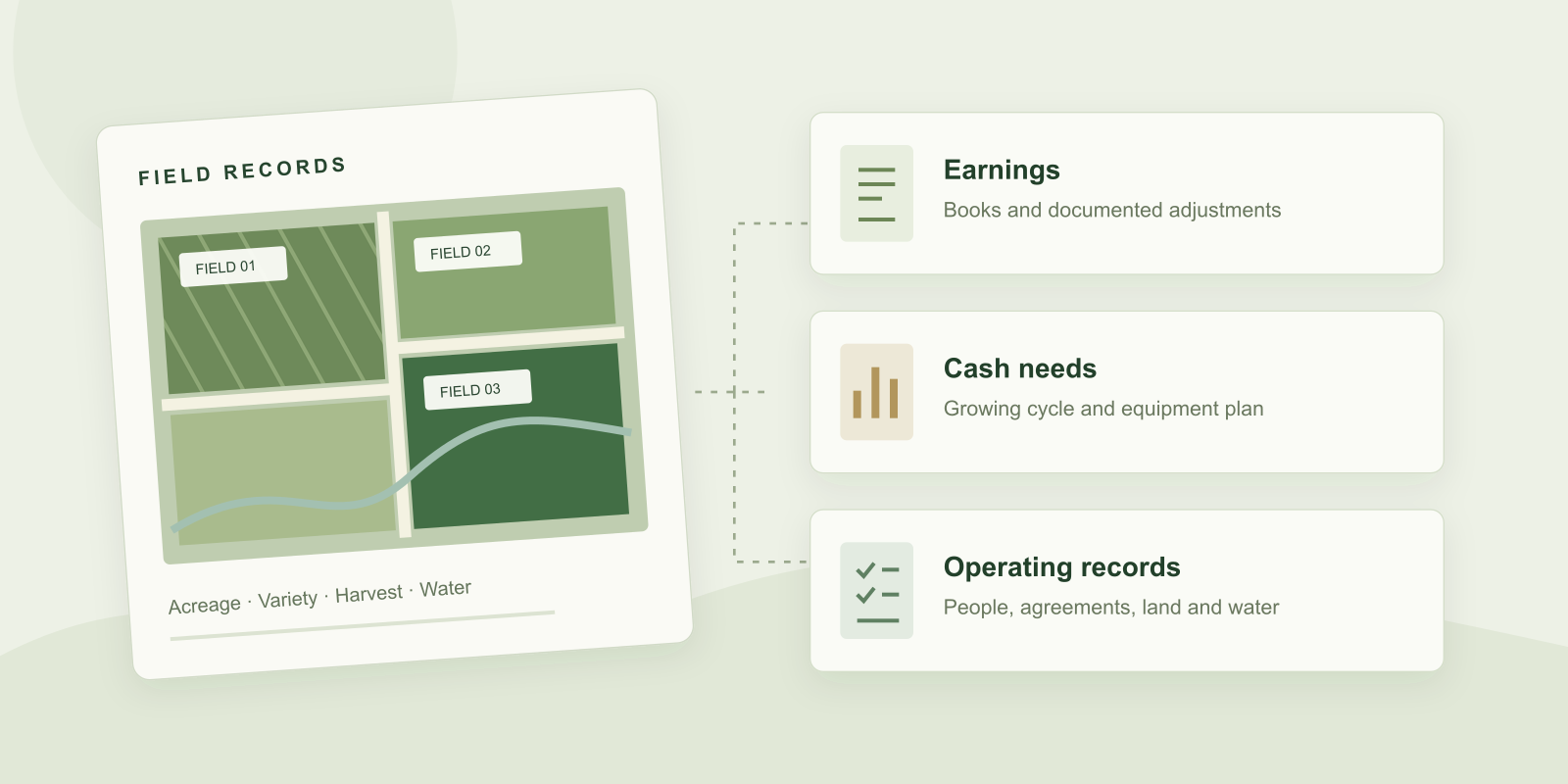
Prepare the farm so another owner can understand its earnings, fund the growing cycle and keep it operating after you leave.
- Reconcile monthly books and explain the difference between tax accounts and production-year economics.
- Show EBITDA and SDE clearly, including replacement labor and market rent.
- Plan seasonal cash, debt payments and equipment replacement separately from earnings.
- Connect field inventory to customer commitments, land control and water records.
- Start with a first 90 days plan. A suggested 12 to 24 month preparation horizon is a recommendation, not a sod-industry average.
If you may sell your sod farm in the next few years, I would start with a question you can work on today: could someone else understand how the farm makes money and keep it running after you leave?
Preparing for a sale means reconciling your books, explaining normal earnings, documenting cash needs and organizing the records that allow another owner to keep growing and selling sod. It also means making the owner's daily work transferable.
I recommend starting 12 to 24 months before going to market, if you have that flexibility. That is a practical planning recommendation, not a measured sod-industry average. If a family or health issue gives you less time, start by identifying the largest gaps and dealing with them openly.
Start with books that explain the farm
Clean books should let someone trace a delivery from the harvest record to the invoice, customer payment and bank deposit. They should also explain what the business owes and what it needs to keep operating.
As a starting package, I would gather the last three full years of financial statements and tax returns, current monthly statements, the general ledger and supporting schedules. Three years is a useful starting recommendation here, not a rule that every buyer or lender follows.
Keep these records together:
- Monthly income statements and balance sheets, with the accounting basis clearly identified.
- Bank and credit-card statements and completed reconciliations.
- Accounts receivable and payable aging reports, customer deposits and disputed balances.
- Payroll, owner and family compensation, benefits and employer costs.
- Loans, equipment financing, leases, collateral and personal guarantees.
- Fixed assets, equipment purchases and disposals, repairs and replacement plans.
Separate revenue from your own sod production, purchased sod, delivery, installation and other services where reliable records allow it. An increase in invoice dollars may come from freight, a different cultivar mix or more resale sod. Those changes can mean something different from an improvement in production margins.
Cash-basis tax profit and production-year earnings
A tax return can be correct for its purpose and still leave questions about one year's production economics. Cash receipts and payments may occur in different periods from the production and resource use they relate to. Farm management accounts can reconcile those timing differences through inventories, receivables, prepayments and payables. Iowa State Extension explains the cash-to-accrual reconciliation.
Consider two invented examples:
- A customer pays $60,000 in January for sod delivered in December. Under the example's accrual policy, the revenue belongs in December, with a receivable until collection.
- The farm pays $25,000 in December for fertilizer that remains unused for the next season. Under the example's policy, the amount stays in a prepaid or supply asset until use.
These are timing questions, not automatic earnings add-backs. Ask your accountant to establish the appropriate treatment for the actual records and reporting basis. Keep the reconciliation from tax income to management income visible instead of quietly changing filed numbers.
Standing sod needs particular care. Use a consistent accounting policy supported by field records. Planted acreage, harvestable acreage and an inventory book value are different things.
Understand EBITDA before discussing a price
EBITDA means earnings before interest, income taxes, depreciation and amortization. Begin with a defined net-income figure and show the amounts added back. Any further adjustments should be visible in a separately labeled measure, such as adjusted EBITDA. The SEC's non-GAAP guidance provides useful discipline for those definitions; its public-company disclosure rules are not a reporting mandate for a private sod farm.
EBITDA helps organize the earnings discussion before specified financing, tax and noncash accounting charges. It does not establish a purchase price or tell you what cash an owner can withdraw.
EBITDA and SDE answer different questions
Seller's discretionary earnings, or SDE, is recast earnings before interest, entity income taxes, depreciation, amortization and one working owner's compensation, with accepted discretionary or nonrecurring adjustments. Adjusted EBITDA accounts for the market cost of replacing the seller's continuing work. The IBBA glossary describes those brokerage conventions; state the exact definition used in an actual presentation.
If you handle production, sales and dispatch, those jobs still need to be done. A buyer who performs your full role may look at SDE. A buyer who hires management needs to allow for that payroll. Neither approach makes management free.
A hypothetical EBITDA bridge
The annual figures below are invented for a C corporation with an accrual management income statement. Entity income-tax expense is already included in net income. The compensation and rent assumptions are examples, not market evidence.
| Step | Annual dollars |
|---|---|
| Reported after-tax net income | $200,000 |
| Add interest expense | $50,000 |
| Add entity income-tax expense | $30,000 |
| Add depreciation expense | $120,000 |
| Add amortization expense | $0 |
| EBITDA | $400,000 |
| Add owner salary and benefits already expensed | $180,000 |
| Deduct full market replacement pay and benefits | ($130,000) |
| Add documented personal expense | $10,000 |
| Add qualifying nonrecurring legal expense | $15,000 |
| Deduct related-party rent shortfall | ($30,000) |
| Deduct nonrecurring equipment-sale gain | ($20,000) |
| Adjusted EBITDA | $425,000 |
The owner compensation produces a $50,000 net upward adjustment, after allowing for replacement work. The rent adjustment goes the other way: the illustration assumes $40,000 of recorded rent and $70,000 of supported market rent, reducing earnings by $30,000.
Using the same assumptions, SDE for a buyer performing the one owner's full role is $555,000: adjusted EBITDA of $425,000 plus the $130,000 replacement compensation. That includes the economic benefit of doing the job. It is not spendable cash.
What makes an adjustment supportable
Keep the ledger entry, invoice, explanation and replacement assumption beside every proposed adjustment. Ask what changes after the sale and what cost continues.
- Owner pay: Add back only compensation already charged to earnings, then allow for all continuing duties. Owner draws or distributions that never reduced net income are not salary add-backs.
- Family labor: Below-market pay can require a downward adjustment. The replacement plan may need more than one person.
- Related-party rent: Show actual and supported market charges under comparable lease terms. Identify who pays property taxes, insurance, maintenance and irrigation costs.
- Personal expenses: Identify the specific expense and evidence that the operating business will no longer bear it.
- Unusual costs and gains: Explain why a cost will not recur or need a replacement. Remove corresponding unusual gains consistently. A buyer may disagree with the adjustment.
Ordinary fertilizer, necessary labor, recurring professional fees and normal repairs belong in the operating expense base. Repeated weather exposure requires risk analysis; describing each event as unusual does not eliminate the exposure.
Add depreciation once. A capitalized equipment purchase is not a second earnings add-back. Seller personal income taxes are not entity income-tax expense. If a pass-through business has no such expense in reported net income, there is no matching entity-tax amount to add back.
Show why EBITDA is not cash flow
A farm can report positive earnings while needing cash for equipment, debt payments or the period between paying production costs and collecting from customers. Put a cash plan next to the earnings bridge.
A separate cash planning illustration
Assume the previous example's normalizing changes have taken effect. Assume earnings convert to cash except for the items shown, with no other timing differences, asset disposals or financing changes. This is a simplified planning illustration, not a statement of cash flows or a financing proposal.
| Planning step | Annual dollars |
|---|---|
| Adjusted EBITDA under the assumed operating model | $425,000 |
| Less cash interest | ($50,000) |
| Less cash entity income taxes | ($30,000) |
| Less increase in operating working capital | ($80,000) |
| Less cash capital expenditures | ($140,000) |
| Less scheduled debt principal | ($60,000) |
| Cash remaining before distributions in this illustration | $65,000 |
Here, operating working capital excludes cash, financing debt and the income taxes and interest shown separately. The $140,000 is assumed actual cash capex, not depreciation or a reserve deducted again. Debt principal uses cash without being an EBITDA expense. Replacement management is already included in adjusted EBITDA and is not deducted twice.
Map the seasonal cash requirement
In farm finance, working capital means current assets less current liabilities. There is no universal adequate dollar amount for every farm. A sale agreement may define operating working capital more narrowly, so keep the two definitions clear. University of Minnesota Extension discusses these farm finance measures.
I would prepare a rolling 13-week cash forecast and a monthly view through at least one full growing and sales cycle. Show payroll, fertilizer, fuel, irrigation power, rent and repairs against expected collections. Mark the low-cash period, borrowing availability and operating-line renewal date.
Customer deposits also need attention: cash collected for undelivered sod can come with an obligation to produce or deliver later. A year-end bank balance does not tell the whole story.
Be realistic about equipment replacement
List harvesters, tractors, mowers, trucks, pumps and irrigation equipment by ownership or lease status, age, condition, hours or mileage and major service history. Separate normal maintenance, deferred repairs, replacement capex and expansion projects.
A tax depreciation schedule records accounting history. It does not tell the buyer when a worn harvester or pump will need cash. Keep replacement estimates and their sources beside the operating plan.
Make the customer relationships and daily work transferable
Prepare a customer schedule showing monthly revenue, quantities, credit terms, payment history and gross margin where the records support it. Combine related accounts under the actual economic customer so several entities do not disguise one relationship.
For an invented farm with $3 million in annual sales, a customer buying $900,000 represents 30 percent of revenue. That calculation is not an acceptable-concentration threshold. The useful questions are whether the work recurs, depends on one development, relies on the seller personally or can be replaced at comparable margins.
Distinguish signed commitments from forecasts, quotes and repeat verbal orders. A project pipeline should not be presented as contracted future revenue.
Review contracts and obligations early
Build a register of customer and supplier agreements, hauling arrangements, cultivar licenses, certification records, land leases, equipment leases, insurance and financing documents. Record legal parties, term, renewal, assignment and change-of-control provisions and questions about consent.
Keep a separate list of debts, liens and personal guarantees with balances as of a stated date, collateral, maturity and payoff requirements. A balance sheet does not prove a lien has been released. Ask advisers to review the actual terms rather than assuming an agreement transfers unchanged. The SBA's general sale guidance emphasizes planning and comprehensive treatment of the assets, liabilities and agreement.
Write down what the owner actually does
Who can price an order, approve credit, schedule harvest, dispatch a truck, manage irrigation, run payroll or handle a breakdown? Name the responsible person and a backup for each task.
Write usable procedures and identify training gaps. An agreed, limited test of delegating selected decisions can show where the business still depends on the owner. Keep safety and emergency support in place. Document what stalled and why, then improve the process.
Describe a possible transition role realistically. Do not promise employee retention, customer consent or a consulting arrangement before the relevant people have agreed.
Connect the field inventory to land and water records
“We have 400 acres of sod” leaves important questions unanswered. Which varieties are growing? What is ready to cut? Which blocks are in regrowth, reserved or affected by a quality problem?
Use one field identifier across the map, production log, harvest records, inventory and irrigation files. A useful field schedule includes:
- Gross acres, planted acres and estimated harvestable area.
- Species and cultivar, planting or last harvest date and regrowth status.
- Expected availability, reservations and customer commitments.
- Observed weed, disease, drainage or quality problems, with an inspection date.
- Relevant licensing, royalty or certification records.
- Landowner or lessor, lease reference, irrigation block and permit reference.
The UF/IFAS Florida Sod Inventory and Pricing Report for 2025 separates turf types and certain certification and licensing categories. It is useful context, not a sale-inventory form or a valuation of your farm.
An invented 40-acre field might include 5 acres of roads and drains and 8 acres still growing back. That leaves 27 acres potentially ready before other quality and harvest limits. The point is to reconcile the area, not multiply headline acreage by a selling price.
Document the right to keep farming
Identify who owns each parcel and which entity operates it. Gather deeds, surveys, access rights, leases and amendments. For leased land, identify term, renewal options, rent changes, assignment requirements and rights to harvest the crop or remove equipment at expiry.
If a related entity owns the land, document that relationship and the operating business's occupancy terms. Keep the property assumption consistent with the earnings presentation. Valuing the business and its assets is a separate step from getting those records ready.
Make the water file usable
Keep permits, the named holder, expiration, conditions, withdrawal-point maps, reporting records and correspondence together. List unresolved issues plainly.
For example, the Southwest Florida Water Management District's water-use permit transfer form addresses the named permittee, legal control and supporting property documents. Partial transfers or changes can require different handling. Do not assume a deed transfers the permit. Confirm the current path with the district responsible for the actual farm.
For an applicable Florida sod BMP operation, organize the enrollment material, checklist, nutrient and soil records and irrigation evaluations and repairs. The 2024 FDACS sod BMP manual calls for applicable records to be retained for at least five years. Requirements depend on the program and practices involved; this is not one identical transaction checklist for every farm.
Your first 90 days of preparation
Start with a manageable sequence. Name one person to keep the work moving and maintain an issue log with the question, responsible person, due date and supporting file.
| Period | Main work | Useful result |
|---|---|---|
| Days 1 to 30 | Gather statements and tax records; reconcile current bank balances; identify entities, parcels, leases and missing files. | One record index and an honest gap list. |
| Days 31 to 60 | Complete customer, debt, equipment and field schedules; draft the earnings bridge, replacement duties and rent assumptions. | A working operating picture with unsupported assumptions clearly marked. |
| Days 61 to 90 | Complete another monthly close; build the cash forecast; test a small information request and selected delegated duties. | A repeatable routine and a plan for issues needing another season of evidence. |
When time allows, use the following months to demonstrate consistent reporting, test responsibilities and address lease, license or permit questions. Spend the final preparation period checking the current numbers, resolving inconsistencies and organizing controlled information access.
Keep preparation separate from the sale process
Readiness comes before and can continue during a sale process. Marketing involves confidential materials, qualified buyers and offers. An LOI records proposed terms; counsel should review its legal effect. Diligence tests the financial and operating picture while financing, consents and definitive agreements progress toward closing.
These activities can overlap, and a process can end without a completed sale. Do not treat a suggested preparation horizon as a promised time to find a buyer or close.
A monthly checklist you can keep using
Choose a monthly close date the farm can meet. Assign a preparer and reviewer, then use the same routine:
- Reconcile cash. Complete every bank and credit-card reconciliation and resolve unmatched items.
- Check sales cutoff. Match deliveries to invoices and credits. Review unbilled deliveries, deposits and undelivered orders.
- Review collections and bills. Update receivable aging, disputes, payables and invoices received after month end for earlier work.
- Reconcile payroll and obligations. Check owner and family compensation, employer costs, debt balances and principal versus interest.
- Update field and supply records. Record acreage, regrowth, harvest, reservations, inputs and prepayments using the accountant's agreed policy.
- Review equipment spending. Identify repairs, capital purchases, disposals and changes to the replacement plan.
- Explain performance. Compare the month and year to date with the prior year and budget. Identify price, quantity, mix, freight and weather effects.
- Refresh cash and adjustment schedules. Update the cash forecast and retain evidence for every proposed earnings adjustment.
Preserve a dated close package and record later corrections. A dependable routine is more useful than a one-time cleanup that falls behind again.
Organize a data room before someone requests it
A data room is a controlled collection of documents used to answer transaction questions. Start with an internal preparation folder and one current index. Suggested folders are:
- Ownership and entities.
- Financial statements, tax returns and reconciliations.
- Earnings adjustments and their supporting evidence.
- Cash forecasts, receivables, payables, debt and leases.
- Customers, suppliers and agreements.
- People, responsibilities and operating procedures.
- Fields, inventory and production records.
- Equipment and replacement planning.
- Land, access and occupancy agreements.
- Water, applicable BMP records and other known issues.
Give each file an entity, period, owner and update date. Keep missing documents and unresolved questions in an open-issues log. Use the agreed confidentiality and adviser process when sharing, and restrict personal identifiers, credentials and sensitive employee or customer details.
Before marketing, ask someone who did not prepare the files to trace the earnings bridge and find a lease, a field record and a permit condition. The questions they cannot answer show you where preparation still needs work.
Questions owners often ask
Can I prepare without committing to sell?
Yes. Reconciled books, documented roles, a cash forecast and organized farm records are useful management work. They also leave you better prepared if your plans change.
Can I add back my full salary?
Start with compensation actually expensed and account for the continuing work. The net adjustment depends on supported replacement costs and whether the presentation is SDE or adjusted EBITDA. Distributions that never reduced net income are not salary add-backs.
Should I buy new equipment before selling?
Start with the farm's operating needs, condition and cash plan. Document necessary replacements and deferred repairs. This article does not assume a new purchase will return its cost in a sale price.
Do I need to own the land to prepare the business for sale?
Preparation applies to owned and leased ground. For leased land, the questions include the remaining term, renewal, assignment, consent and crop rights. The actual agreement and proposed transaction control what needs to happen.
What should I do first this week?
Gather the latest statements, debt list, field map, land agreements and water file. Create the gap log and assign responsibility for the first monthly close. That is enough to start.
Put the operating picture together first
I would want the next owner to understand what the farm earns, what cash it needs and what lets it keep operating. Start with the records and responsibilities you can improve now. Clear information will make the later discussion about price and terms more useful.
If you want to discuss your own preparation priorities, you can share a few details about your sod farm.
This article provides general preparation information, not tax, legal, accounting or transaction advice for a particular farm. All financial and acreage examples are hypothetical. Research reviewed October 29, 2026.
Sources and scope
- SEC Division of Corporation Finance: Non-GAAP Financial Measures Compliance and Disclosure Interpretations, including sections 100 and 103. Public-company guidance used for definitions and presentation discipline, not private-farm reporting requirements.
- International Business Brokers Association: Glossary, accessed October 29, 2026. General brokerage definitions of discretionary earnings, adjusted EBITDA and owner compensation; not a sod transaction study.
- Iowa State University Extension: Converting Cash to Accrual Net Farm Income, updated July 2021. General farm management guidance; standing-sod policies require adaptation.
- University of Minnesota Extension: Ratios and Measurements in Farm Finance, reviewed 2026. Farm liquidity and replacement-capital concepts; no universal target or acquisition working-capital definition is assumed here.
- UF/IFAS and Turfgrass Producers of Florida: Florida Sod Inventory and Pricing Report 2025, published November 2025. A member survey with 26 responses from 50 invitations, principally describing 2024 production and prices. Used for inventory categories, not current prices or individual-farm values.
- FDACS: Florida Sod Operations 2024 BMP Manual, revision October 2024, especially printed pages 7 and 24–25. Applicable Florida program records and irrigation practices.
- SWFWMD: Application to Transfer a Water Use Permit, form dated May 2014 and linked from the district's current forms page on the research date. District-specific guidance; confirm current requirements for the actual permit.
- US Small Business Administration: Manage Your Business, section on closing or selling, accessed October 29, 2026. General planning and sale-agreement guidance, not a sod-specific checklist or timeline.